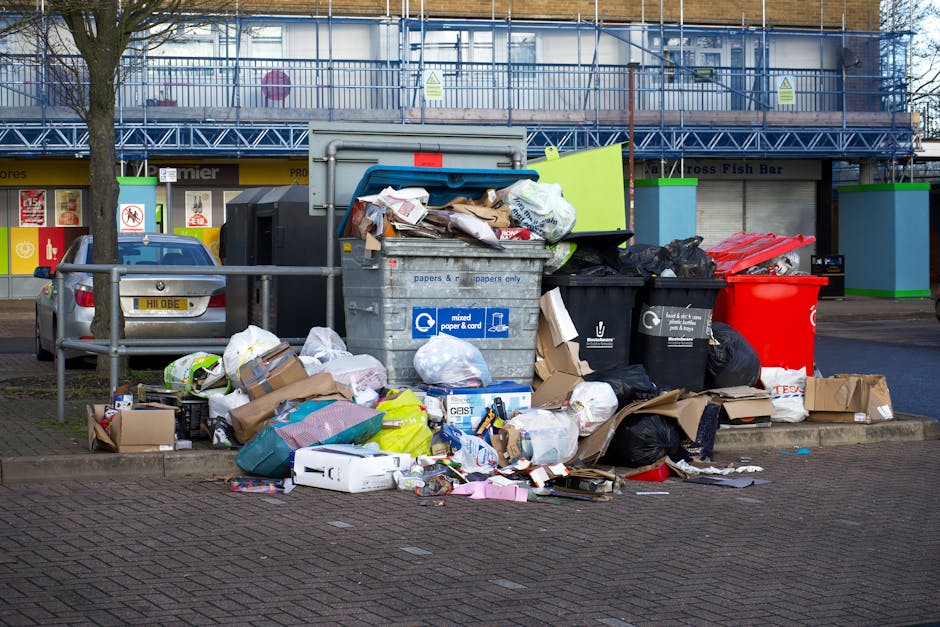
Emergency rubbish clearance Luton same day solutions for hoarding
If you are dealing with a home, flat, garage, or loft that has tipped from "cluttered" into a real problem, you probably need help fast. Emergency rubbish clearance Luton same day solutions for hoarding are designed for exactly those moments when access is limited, stress is high, and the mess cannot wait until next week. Maybe there is a blocked hallway, a back door you can't open, or piles of bags that have started to smell. Maybe the situation is upsetting, awkward, or simply too much to tackle alone. Either way, a same day clearance approach can make the next step feel manageable.
This guide explains how emergency clearance for hoarding situations works, what to expect on the day, how to prepare safely, and how to choose the right support without making things harder than they already are. It also covers practical risks, best practice, and a clear checklist you can actually use. Let's get into it.
Table of Contents
- Why emergency rubbish clearance in hoarding situations matters
- How same day clearance works from first call to final sweep
- Key benefits and practical advantages
- Who this is for and when it makes sense
- Step-by-step guidance
- Expert tips for better results
- Common mistakes to avoid
- Tools, resources and recommendations
- Law, compliance, standards and best practice
- Options, methods and comparison table
- Case study or real-world example
- Practical checklist
- Conclusion
- Frequently asked questions
Why Emergency rubbish clearance Luton same day solutions for hoarding Matters
Hoarding-related clearance is rarely just about rubbish. It is about safety, dignity, access, and getting a space back to a point where it can be used properly again. In many cases, the issue builds slowly, then suddenly becomes urgent. A doorway is blocked. A leak spreads through stacked items. A family member needs entry for care. Or a landlord, housing officer, or neighbour raises concerns because the property is affecting other people too.
That urgency matters. The longer clutter and waste stay in place, the harder the job usually becomes. Bags split, pests move in, odours settle, and small access problems turn into bigger ones. With same day rubbish clearance, the immediate pressure can be reduced quickly, which is often the first real step toward a longer recovery process.
To be fair, people often underestimate how emotionally heavy this can be. If you are looking at a room full of accumulated items, you are not just looking at physical waste. You are looking at decisions, memories, shame, and overwhelm all piled together. A calm, organised clearance service can take some of that weight off the situation without making a drama of it.
For many Luton households, the biggest value is simple: swift access. The quicker a clearance team can create a safe path through the property, the quicker the person living there, or caring for them, can breathe again. And that breathing room changes everything.
How Emergency rubbish clearance Luton same day solutions for hoarding Works
Same day hoarding clearance usually follows a fairly straightforward process, even if the property itself is complicated. The service is built to move quickly, but it still needs a sensible plan. You do not want people rushing blindly into a property full of sharp edges, unstable stacks, or sentimental items mixed in with waste.
Here is the practical flow most people can expect:
- Initial contact and brief description. You explain the type of property, how urgent the situation is, and whether access is blocked, partially blocked, or clear enough for a team to work safely.
- Assessment of the work. A proper clearance team will want to understand volume, access, hazards, and whether items need sorting, removal, or separate handling.
- Arrival and safety check. On the day, the team should look at the layout first, identify any immediate risks, and agree the working order before moving things.
- Clearance and loading. Waste is removed in a structured way, often beginning with access routes, then larger obstructions, then remaining loose items.
- Sorting for reuse, recycling, and disposal. Not everything is automatically treated as waste. Some items may be suitable for separate handling, depending on condition and what the client wants.
- Final sweep or tidy-up. Once the major clearance is complete, the area should be left accessible and safer than when the team arrived.
If the property is severely affected, the job may need more than one visit. That is not a failure. Sometimes a same day response is about creating immediate relief, not finishing every last detail in one go. Truth be told, that is often the smarter outcome anyway.
A reliable service should also be clear about what it can and cannot do. For example, if there are hazardous materials, biohazards, aggressive structural issues, or a risk of collapse, a cautious team will pause and explain the limits rather than pretend everything is easy. That honesty is a good sign.
Key Benefits and Practical Advantages
The obvious benefit is speed. Same day help means the problem starts shrinking today, not in a week's time. But there is more to it than urgency alone.
- Faster access to the property: Hallways, kitchens, bathrooms, and exits can be reopened quickly.
- Reduced health and safety risk: A clear route lowers the chance of trips, falls, and blocked escape paths.
- Less emotional strain: Working with a team can make a difficult job feel less personal and more structured.
- Better decision-making: Once the space is clearer, it becomes easier to judge what should stay, go, or be handled separately.
- More dignified support: Good clearance teams work without judgement. That matters more than people sometimes admit.
- Improved chances of a full recovery plan: Clearing the worst of the clutter can create the space needed for cleaning, repairs, or support services.
There is also a practical financial angle. Leaving the issue to grow can make the eventual job more time-consuming. That does not always mean it becomes dramatically more expensive, but it can mean more labour, more sorting, and more disposal volume. Getting ahead of it early is usually kinder to everyone involved.
If you are comparing related services, it may help to think beyond the single job. A property with clutter in multiple rooms may need a broader approach such as a house clearance or home clearance, while a single room or contained area may be more like a targeted flat clearance. That distinction can shape the time, team size, and workflow.
Who This Is For and When It Makes Sense
This type of emergency clearance is not only for extreme situations. It is useful whenever the condition of a property is making normal life, work, or care difficult. The most common scenarios include:
- families trying to help a relative who is struggling with hoarding behaviour
- tenants or landlords needing urgent access before an inspection, repair, or changeover
- older adults whose mobility has become unsafe because of blocked routes
- people returning to a property after hospital care, loss, or a long period away
- carers and support workers needing space to carry out visits safely
- owners dealing with sudden deterioration after a leak, infestation, or breakdown in daily routines
It also makes sense when there is more than one type of clutter involved. For example, a hoarded garage often contains old furniture, broken tools, bags of mixed rubbish, and items left from previous jobs. In that case, a combined approach that includes garage clearance, furniture clearance, or furniture disposal may be the most efficient path.
Business premises can also be affected. It is less common, but not rare, for back offices, storage rooms, or break areas to become unusable. If the issue is in a workplace rather than a home, a relevant service such as office clearance or business waste removal may be more appropriate.
And yes, sometimes people wait far too long because they feel embarrassed. That is very human. But the mess does not get offended if you ask for help. A bit of perspective helps here.
Step-by-Step Guidance
If you want the best outcome, it helps to approach the job in stages. The biggest mistake people make is trying to solve a complicated hoarding clearance with a random burst of panic. That rarely ends well.
1. Make the first call with a clear picture
Start with a brief, honest description. Mention what rooms are affected, whether access is possible, and whether there are concerns such as damp, waste build-up, unpleasant odours, or items blocking doorways. A little detail saves a lot of confusion later.
2. Decide what must happen today
Not every item needs a decision before the team arrives. Focus on the urgent outcomes: opening a walkway, clearing a front door, making a kitchen usable, or restoring access to a bathroom. When the priority is obvious, the work becomes easier to manage.
3. Identify anything sensitive
Photographs, documents, medication, cash, keys, and personal papers should be pointed out early. Mixed hoards can hide important items in plain sight. If the team knows what matters, they can avoid accidental disposal. Small thing, big difference.
4. Prepare for practical movement
If safe to do so, clear one small entry point, keep pets away, and make sure lights and access routes are usable. Do not try to "sort everything" before help arrives. That usually turns into a second clearance before the first one even starts.
5. Let the team work in a sensible order
Usually the best approach is to clear access first, then bulky items, then mixed bags and loose waste. In a hoarding context, it is often better to make the property safe and open before worrying about perfection.
6. Review the outcome and next steps
Once the urgent work is done, look at what remains. Sometimes the property needs another phase: deep cleaning, repairs, more sorting, or a further clearance visit. The important thing is that the emergency pressure has been reduced.
Expert summary: The best same day hoarding clearance is not the fastest one in a chaotic sense. It is the one that restores access safely, protects important belongings, and leaves the situation calmer than before.
Expert Tips for Better Results
A few simple habits can make a big difference to how smoothly the day goes. Nothing fancy. Just sensible stuff people often skip when they are overwhelmed.
- Be specific about the urgent area. Say "hallway and kitchen access" rather than "the whole house" if that is the real priority.
- Flag sentimental items early. Even one small box of photos or letters deserves a clear mention.
- Ask how mixed waste is handled. Hoarded properties often contain a blend of general rubbish, furniture, and reusable items.
- Expect some sorting on site. A good clearance is usually part removal, part triage, part calm judgement.
- Keep communication simple. If you are speaking for a relative, one decision-maker makes life easier. Too many voices, and everything slows down.
- Allow for emotion. People may change their minds when they see the pile shrinking. That is normal, honestly.
One practical observation from real-world clearances: daylight changes how a room feels. A space that looks impossible at 8am can feel much more manageable by mid-morning once one route is open and fresh air is moving through. Tiny shift. Big effect.
If sustainability matters to you, ask how reusable items and recyclable materials are separated. Many clients also like to understand the provider's approach to responsible disposal, so a page such as recycling and sustainability can be a useful place to check a company's values before booking.
Common Mistakes to Avoid
Hoarding clearances tend to go wrong when people try to make them look neater than they are. Better to be practical than polished.
- Waiting until access becomes critical. A blocked exit or unusable bathroom turns a difficult job into an urgent one.
- Throwing everything into one pile. This makes it harder to save important items and slows the clearance down.
- Not mentioning hazards. Sharp metal, broken glass, mould, pests, or unstable stacks should be flagged early.
- Assuming same day means "instant and unlimited". Speed still depends on access, volume, and safety.
- Trying to handle a severe property alone. That often leads to exhaustion, frustration, and half-finished work.
- Choosing purely on price. The cheapest quote is not always the safest or most reliable. Sometimes it is, but you need more than a number.
There is also a softer mistake: being too hard on yourself or the person affected. Hoarding is rarely solved by scolding. The practical job and the human side need to work together. Easy to say, harder on a difficult Tuesday afternoon, but still true.
Tools, Resources and Recommendations
You do not need specialist equipment to make the first move, but a few basic tools can help the process feel less chaotic.
- Gloves: for light sorting where there may be dust or sharp edges.
- Strong bin bags or boxes: useful for separating obvious rubbish from items to keep.
- Basic labels or sticky notes: helpful for marking "keep," "maybe," and "go."
- A torch: dark corners, cupboards, and loft spaces often hide the things people forget about.
- Phone camera: useful for recording layout, keeping a rough inventory, or documenting before-and-after progress.
Beyond simple tools, the most useful resources are often service pages that help you map the job properly. For example, if the clutter includes attic storage, loft clearance can be relevant. If it is mostly domestic buildup across several rooms, home clearance may be the more suitable starting point. If the issue is mixed with renovation waste or renovation leftovers, builders waste clearance may also come into play.
If you want to understand the company behind the service, an about us page is worth reading. And if you are ready to ask direct questions, the contact page is the natural next step.
Law, Compliance, Standards and Best Practice
Any rubbish clearance involving a home or business should be carried out with care, and that includes proper handling of waste, safe working practices, and respect for the occupier's property. In the UK, waste must be handled and transferred responsibly, and reputable clearance firms will usually have processes that reflect that. You do not need to become an expert in regulations yourself, but you should expect the provider to work cleanly, safely, and transparently.
For hoarding situations, good practice usually includes:
- checking access and hazards before lifting anything
- protecting exits and walkways
- separating items where reuse or recycling is possible
- avoiding unnecessary disturbance where dust, mould, or pests may be present
- respecting the client's instructions about personal or sensitive items
- handling loading and disposal in line with normal waste duties
If the property contains suspected hazardous items, the provider should treat that as a separate issue rather than bundling everything together. That might include needles, chemicals, medical waste, or contaminated materials. Same day work is useful, yes, but safe boundaries still matter.
It is also reasonable to ask about insurance and safety practices. A responsible company should be able to explain how it protects staff and customers, and what happens if an unexpected issue is found on site. A page like insurance and safety can help reassure you that the basics are taken seriously. If you are comparing how payments work, the payment and security information may also be useful.
For business customers, there is a separate duty of care mindset: office or commercial clearances should be arranged so they do not disrupt operations more than necessary. In those cases, office clearance or business waste removal can help the process stay orderly.
Options, Methods, or Comparison Table
Not every hoarding-related clearance needs the same method. The right approach depends on urgency, volume, and the condition of the property. Here is a simple comparison that can help you think it through.
| Method | Best for | Strengths | Limitations |
|---|---|---|---|
| Same day emergency clearance | Blocked access, urgent safety issues, rapid relief | Fast response, immediate improvement, reduces pressure | May not finish every room if the job is very large |
| Planned staged clearance | Large hoards, emotional sensitivity, long-term decluttering | More control, easier decisions, less overwhelm | Slower to solve urgent access problems |
| Room-by-room clearance | Contained clutter in specific areas | Focused, manageable, less disruptive | Less suitable if the whole property is affected |
| Service-specific clearance | Garages, lofts, flats, offices, or furniture-heavy jobs | Tailored to the space and waste type | May need multiple service types for mixed situations |
The main choice is usually between speed and scope. If access is the urgent issue, same day work is the sensible first move. If the emotional load is high but there is no immediate danger, a staged plan may be better. There is no medal for rushing a difficult situation badly.
Case Study or Real-World Example
Here is a realistic example based on the kind of situations people face regularly. A family in Luton called about a property where the hallway, kitchen entrance, and part of the front room had become heavily cluttered after months of gradual buildup. Nothing dramatic had happened on one single day. It was just life, stress, illness, and avoidance stacking up. By the time they asked for help, the front door could barely open fully and visiting support staff were struggling to get inside safely.
The first priority was not to clear everything. It was to restore access. The team focused on the route from the entrance to the main living space, then cleared the kitchen threshold so people could move around without turning sideways every few seconds. Larger items were separated from loose rubbish, and personal documents were set aside for review. By the end of the same day, the home was still not "finished", but it had gone from overwhelming to workable.
That difference mattered. The family could arrange cleaning, the support worker could visit properly, and the person living there no longer felt trapped by the space. That is the kind of result that makes emergency rubbish clearance worthwhile. Not perfection. Progress.
In another case, a garage that had become unusable because of mixed waste, broken furniture, and old household items was cleared in stages. The initial visit restored access, and a second pass dealt with the remaining bulky items. A small, practical win - but a real one. Sometimes that is enough to change momentum.
Practical Checklist
Use this before the team arrives, or when you are deciding whether to call for same day support.
- Confirm which rooms or areas need urgent attention.
- Identify any blocked exits, walkways, or essential access points.
- Separate known valuables, documents, medication, and keys if possible.
- Make a note of hazards such as mould, broken glass, pests, or unstable stacks.
- Check whether the job is domestic, commercial, or mixed-use.
- Decide whether you want a full clearance or just the urgent areas done first.
- Keep pets and children away from the work area on the day.
- Ask how waste, furniture, and reusable items will be handled.
- Ask about safety, insurance, and what happens if an unexpected problem is found.
- Plan the next step after clearance, such as cleaning, repairs, or a follow-up visit.
One line to remember: if it feels too big to organise perfectly, organise the first ten minutes. That is usually enough to get moving.
Get a free quote today and see how much you can save.
Conclusion
Emergency rubbish clearance in hoarding situations is about more than hauling bags away. It is about restoring access, reducing risk, and helping a difficult space become usable again. Same day solutions are especially valuable when time, safety, or emotional pressure make waiting unrealistic. In Luton, that can mean the difference between a property that feels impossible and one that finally has a clear path forward.
If you are facing this kind of situation, start with the urgent area first, keep your instructions simple, and look for a team that works carefully as well as quickly. A good clearance is calm, respectful, and practical. And once the worst of it is gone, the next step usually feels a little less heavy. Not easy, exactly. Just possible.
That matters more than people realise.
Frequently Asked Questions
What counts as emergency rubbish clearance in a hoarding situation?
It is any clearance that needs to happen quickly because the property has become unsafe, inaccessible, or difficult to use. Common triggers include blocked exits, urgent repairs, health concerns, or the need for immediate access by carers or family.
Can same day hoarding clearance really be done in one visit?
Sometimes, yes. If the space is manageable and access is possible, a same day team can often make a major difference. For larger or more complex properties, the first visit may focus on creating safe access and reducing the worst of the clutter.
How do I know whether I need a full clearance or just a partial one?
If only one room or access route is affected, a partial clearance may be enough. If clutter spreads across several rooms or includes multiple types of waste, a broader clearance is usually more effective.
What should I tell the clearance team before they arrive?
Explain the property type, which areas are blocked, any hazards you already know about, and whether there are items that must not be thrown away. The more accurate the picture, the smoother the job.
Is hoarding clearance different from normal rubbish removal?
Yes. Hoarding clearance usually needs more patience, more sorting, and more sensitivity. There may be personal belongings mixed with waste, and the emotional side can be just as important as the physical work.
Can furniture be removed as part of the clearance?
Usually, yes. In many cases, old chairs, sofas, wardrobes, and mattresses are part of the job. If the space contains a lot of bulky items, services such as furniture clearance or furniture disposal can be relevant.
What if there are dangerous items like needles or chemicals?
Tell the team immediately. Suspected hazardous materials should be handled separately and carefully. A responsible provider will not just sweep everything together and hope for the best.
How do I prepare emotionally for a hoarding clearance?
Try to focus on one goal: making the space safer and easier to live in. It can help to have one trusted person present, and to decide in advance what absolutely must be kept. Small, clear decisions are easier than trying to solve the whole life story of the room.
What happens to the waste after it is removed?
Reputable clearance teams typically sort items for reuse, recycling, and disposal where possible. If you care about responsible handling, it is sensible to ask about their recycling and sustainability approach.
How much disruption should I expect on the day?
There will usually be some noise, movement, and a bit of dust. A good team keeps disruption to a sensible level and works in a steady, orderly way. The first hour can look messy before it looks better, which is normal.
Can you clear a hoarded flat or apartment with limited access?
Yes, though access can affect how the job is planned. Staircases, shared entrances, lifts, and parking all matter. If the property is a flat, a service like flat clearance is often the best fit.
What is the next step after the emergency clearance?
Most people move on to cleaning, sorting what remains, and making a plan to stop the clutter building up again. Sometimes a follow-up clearance is needed, especially if the first visit focused on urgent access only.
How do I choose a provider I can trust?
Look for clear explanations, calm communication, sensible safety practices, and straightforward information about pricing and security. If you want to understand the company better, a page like about us can help, and if you are ready to ask questions directly, use the contact page.